English
 简体中文
 VIETNAM-IMMI.ORG


Last Updated: Wednesday, September 2, 2026
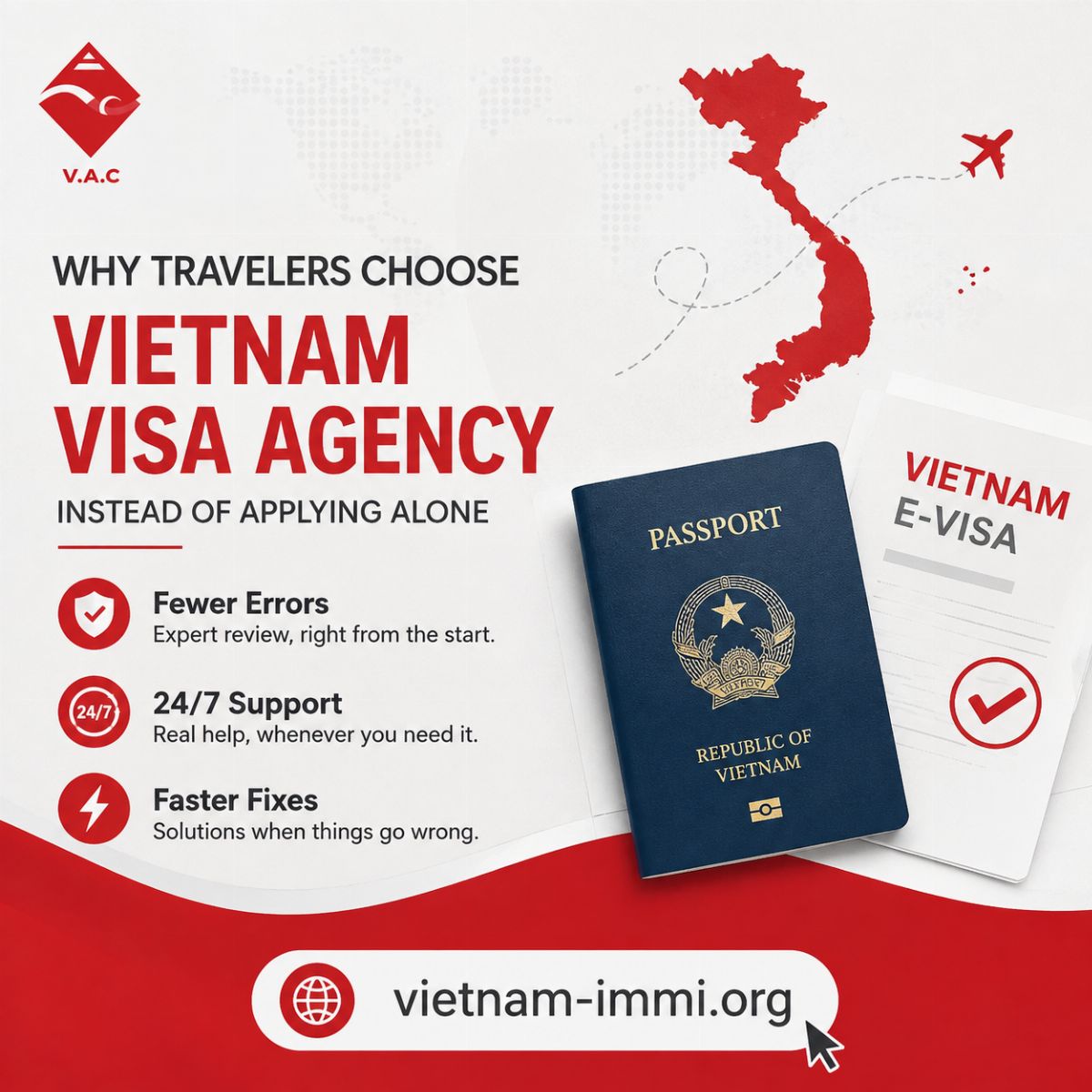
Here's the thing — nobody's stopping you from applying for a Vietnam visa yourself. The government portal is right there, open to the public, no secret handshake required. So why do so many travelers, even ones who are perfectly capable of filling out a form, end up going through a Vietnam visa agency instead? It's not because the form is some impossible puzzle. It's because of what tends to happen the moment something doesn't go quite right — and how much that can cost you, in time and nerves, when your flight is already booked.
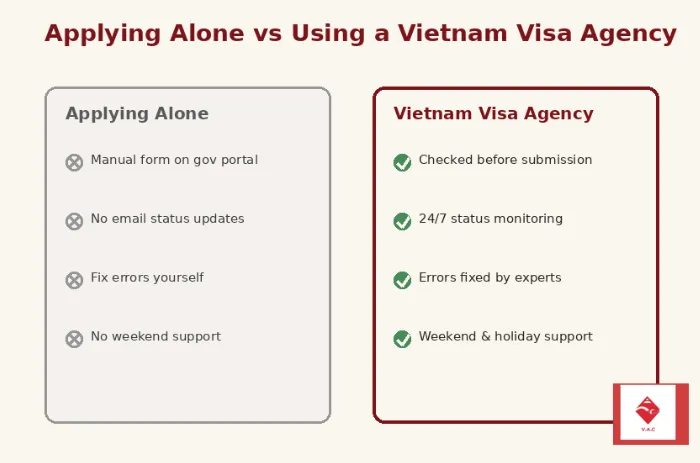
The Real Difference Isn't the Form — It's What Happens Next
Anyone Can Fill Out a Form. Not Everyone Can Fix One.
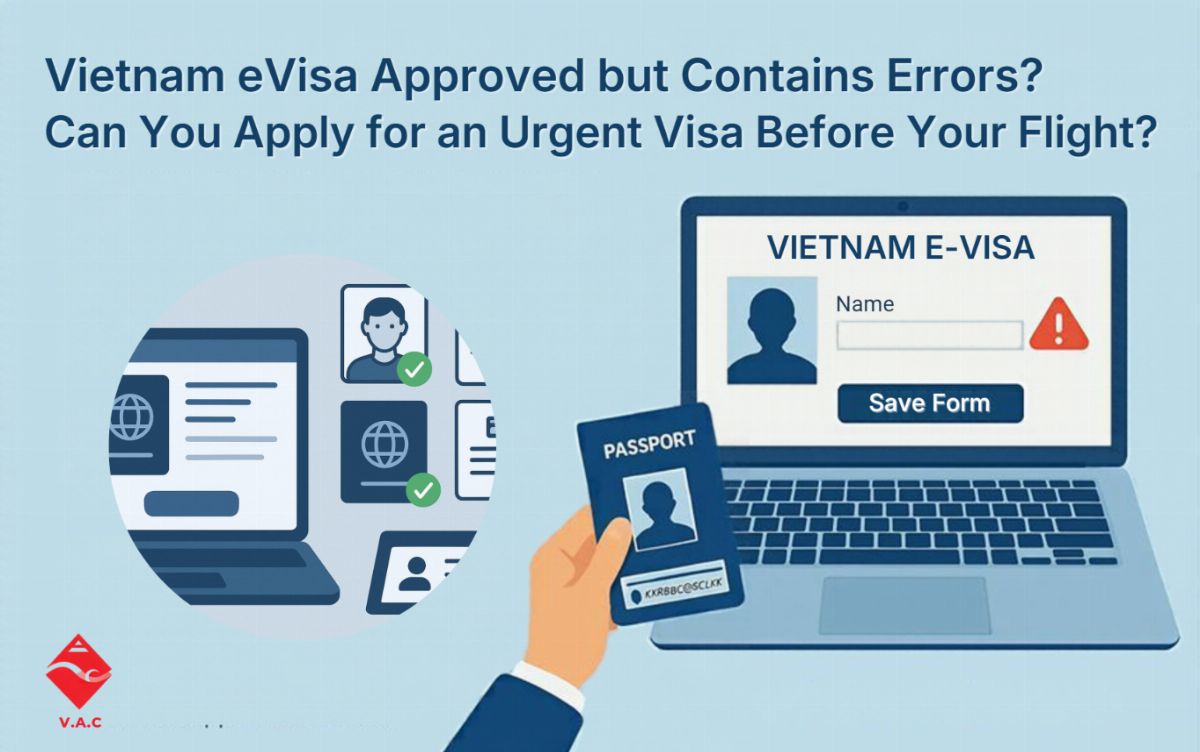
Truth is, the Vietnam e-visa application isn't long. A handful of fields, a photo upload, done. The problem is rarely the form's complexity — it's the small stuff that's easy to miss: a passport photo that's technically out of spec, a name spelled slightly differently than it appears in your passport, an entry port you didn't mean to select. This is basically the whole reason Vietnam visa application support exists — to catch that kind of thing before you hit submit, not after you're staring at a rejection email.
The Portal Won't Tell You If Something's Wrong
Here's something a lot of first-timers don't expect: the official system isn't going to chase you down with updates. With the volume of applications running through it, there's no realistic way for every applicant to get a personal heads-up. So if you're doing this on your own, you're the one who has to keep checking back — and if there's an issue, you might not find out until it's genuinely too late to fix comfortably.
Why Going Solo Often Costs More Time Than It Saves
One Small Slip and You're Starting Over
There's no appeals process if your e-visa gets rejected. None. Your only option is to fix whatever went wrong and submit a fresh application. If that happens three days before you fly, congratulations — you've just lost three days redoing something a second set of eyes could've caught the first time around.
Some Nationalities Just Have It Harder
Not every passport is treated equally here. Some nationalities face extra document requirements or a slower review process, full stop. Travelers from those countries especially tend to gravitate toward a service that already knows the quirks of their situation, rather than figuring it out through trial and error on a generic form.
So What Does an Agency Actually Do For You?
Someone's Watching It 24/7 So You Don't Have To
A team that's actually paying attention can spot a stuck or flagged application right away, instead of you stumbling onto the problem days later. That matters a lot more than people expect when you're applying close to your travel date and every hour is doing work.
A Plan B for When the Clock's Already Running Out
If your flight's close and the standard timeline just isn't going to cut it, you can apply for an emergency visa rather than starting from zero on the government site. Worth a quick look at the Vietnam eVisa emergency Eligible Countries list first though — not every nationality gets access to the same expedited speed.
Pricing You Can Actually See
People hesitate on agencies because of cost, and that's fair. But a trusted Vietnam visa service shouldn't make you guess. Takes about thirty seconds to check pricing and decide for yourself whether standard or expedited processing fits what you actually need.
It Doesn't Have to Stop at the Visa
Once people get used to having someone handle the visa side, they tend to hand off the rest of the arrival too — booking airport fast track service so they're not stuck in a long immigration line, or grabbing a Vietnam eSIM ahead of time so their phone actually works the second they land. None of it's mandatory. Same as the visa itself. It's really just the difference between a trip you have to babysit and one that mostly takes care of itself.
Key Takeaways
-
The application form is public — what you're really paying an agency for is catching and fixing mistakes.
-
The official portal won't proactively flag problems for you, so DIY applicants need to self-monitor.
-
There's no formal appeal for a rejected e-visa — correcting and reapplying is the only route forward.
-
Emergency processing exists, but whether you qualify for it still comes down to nationality.
-
Clear, checkable pricing upfront is one of the better signs you're dealing with a trustworthy agency.
Frequently Asked Questions (FAQ)
1. Is it actually harder to apply for a Vietnam visa myself?
Not exactly harder — riskier is the better word. Small formatting slips or mismatched details are easy to miss without someone double-checking, and fixing them afterward eats up time you might not have.
2. Is using an agency more expensive than just going through the official site?
You're paying a service fee on top of the government fee, yes. But once you check pricing, you can weigh that against the time and risk you're saving — for a lot of people, it evens out.
3. What if I already tried applying myself and it's stuck?
You can still get help reviewing what's already been submitted, and if there's still time, move to an emergency application depending on how close your flight is.
4. Does everyone get the same processing speed regardless of nationality?
No, and this trips people up. Processing speed and document requirements shift depending on your passport, which is exactly why a service that's dealt with different cases tends to move faster than guessing alone.
Whether you need a fast visa, airport fast track, private car, or eSIM, Vietnam-Immi.org is here 24/7 to support your trip.
-
Website: https://vietnam-immi.org
-
App IOS Download: https://apps.apple.com/vn/app/vietnam-immi/id6749606825?l=vi
-
App Android: https://play.google.com/store/apps/details?id=com.vac_mobile&pcampaignid=web_share
-
WhatsApp: +84379522522
-
Hotline: +84.379.522.522
-
Email: sales@vietnam-immi.org