English
 简体中文
简体中文 VIETNAM-IMMI.ORG


Last Updated: Wednesday March 25, 2026
If you’re planning to work, study, do business, or get married in Vietnam, you will likely need to prepare official documents from your home country. However, simply bringing those documents is not enough — they must go through a formal process of document legalization and authentication in Vietnam, along with notarized translation in many cases.
In this guide, we’ll explain everything clearly — from how to legalize documents for use in Vietnam to when you need certified translation services in Vietnam, and how to avoid common mistakes.
Key Takeaways
-
Document legalization Vietnam is required for most official procedures
-
Authentication verifies document authenticity before legalization
-
Notarized translation in Vietnam is necessary for Vietnamese authorities
-
The process includes notarization, authentication, legalization, and translation
-
Using professional services helps avoid delays and errors
Understanding Document Legalization and Authentication in Vietnam
Before using foreign documents in Vietnam, they must be recognized as legally valid by Vietnamese authorities.
What Is Document Legalization Vietnam?
Document legalization in Vietnam refers to the process of verifying that a foreign-issued document is genuine and can be legally used in Vietnam.
This typically involves:
-
Certification by authorities in your home country
-
Authentication by the Vietnamese embassy or consulate
-
Final recognition by Vietnamese authorities
Without legalization, your documents may not be accepted for official purposes.
What Is Document Authentication Vietnam?
Document authentication in Vietnam is closely related but slightly different. It confirms the legitimacy of signatures, stamps, and issuing authorities on a document.
In practice:
-
Authentication happens before or during legalization
-
It ensures the document is officially recognized across borders
Both legalization and authentication are essential when dealing with international paperwork.
When Do You Need to Legalize Documents for Use in Vietnam?
You will likely need to legalize documents for use in Vietnam if you are:
-
Applying for a work permit
-
Studying at a Vietnamese institution
-
Registering a marriage
-
Opening a business or investment project
-
Handling legal or financial matters
Typical documents include:
-
University degrees and certificates
-
Criminal background checks
-
Birth or marriage certificates
-
Business registration documents
Without proper legalization, these documents may be rejected by Vietnamese authorities.
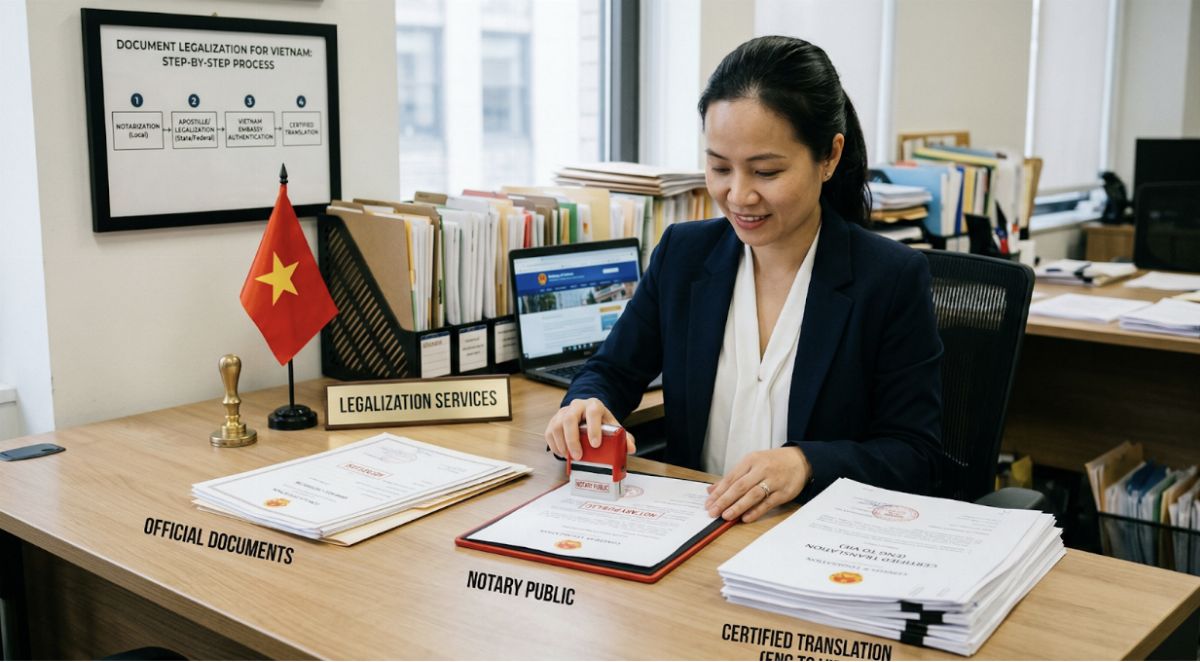
Step-by-Step Process: How to Legalize Documents for Vietnam
Step 1: Notarization in Your Home Country
Before legalization, documents often need to be notarized.
This step confirms:
-
The document is a true copy or original
-
The issuing authority is legitimate
Notarization is usually done by:
-
Notary public offices
-
Government-authorized agencies
Step 2: Authentication by Local Authorities
Next, your document must be authenticated by the relevant authority in your country, such as:
-
Ministry of Foreign Affairs
-
Department of State (depending on country)
This step verifies the notary’s signature and stamp.
Step 3: Legalization at Vietnamese Embassy or Consulate
After authentication, the document is submitted to the Vietnamese embassy or consulate.
This is the official document legalization Vietnam step, where Vietnam confirms the document is valid for use within the country.
Step 4: Translation and Notarization in Vietnam
Once your documents arrive in Vietnam, they usually need to be translated into Vietnamese.
This is where notarized translation in Vietnam becomes essential.
Notarized Translation in Vietnam: What You Need to Know
Many official procedures require documents to be translated into Vietnamese.
What Is Notarized Translation?
Notarized translation in Vietnam means:
-
Your document is translated by a qualified translator
-
The translation is certified and notarized by a local authority
This ensures the translated version is legally equivalent to the original document.
When Is Certified Translation Required?
You will need certified translation services in Vietnam for:
-
Work permit applications
-
Business registration
-
Legal contracts
-
Academic enrollment
In most cases, authorities only accept Vietnamese-language documents, making translation mandatory.
Common Mistakes to Avoid
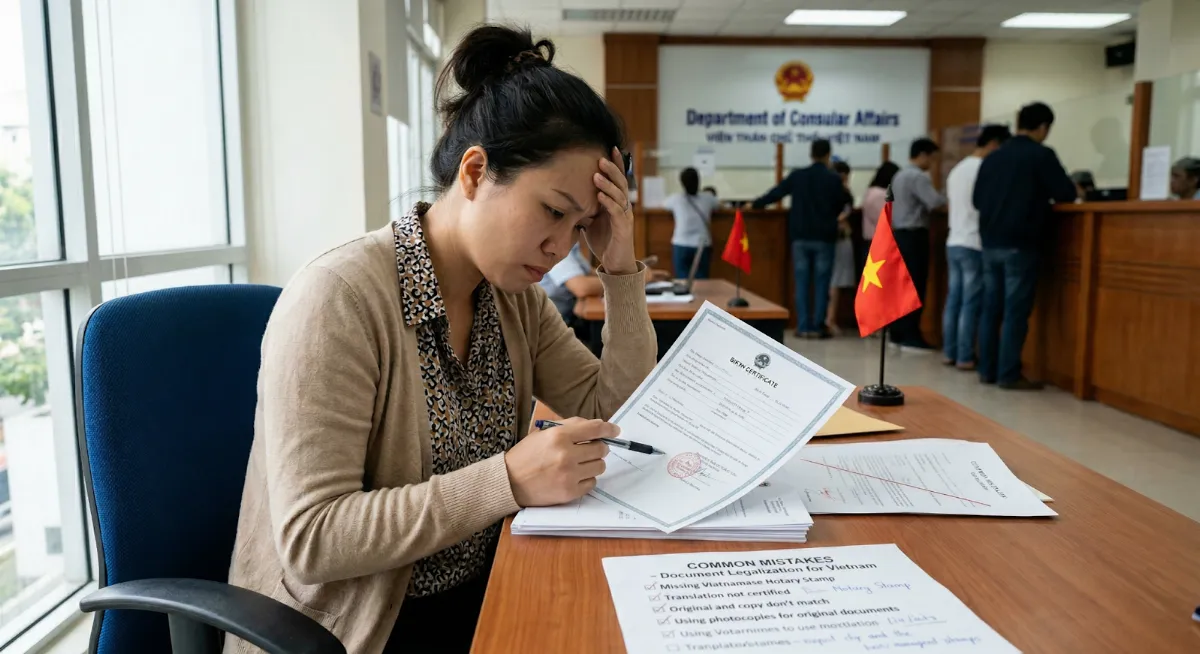
Photo: Collected
Skipping Steps in the Legalization Process
Some applicants try to skip authentication or embassy legalization. This usually results in documents being rejected.
Each step — notarization, authentication, and legalization — is required in order.
Using Unqualified Translation Services
Not all translations are accepted. Using non-certified translators can lead to:
-
Rejected documents
-
Delays in processing
-
Additional costs for re-translation
Always use certified translation services in Vietnam to ensure compliance.
Incorrect or Incomplete Documents
Missing stamps, unclear copies, or incorrect information can invalidate your documents.
Double-check:
-
Names and dates
-
Signatures and seals
-
Document completeness
Frequently Asked Questions (FAQs)
1. How long does document legalization for Vietnam take?
It usually takes 1–3 weeks, depending on your country and document type.
2. Can I legalize documents after arriving in Vietnam?
Some steps must be completed in your home country. However, translation and notarization are typically done in Vietnam.
3. Is notarized translation in Vietnam mandatory?
Yes, for most official procedures, documents must be translated into Vietnamese and notarized.
4. What is the difference between legalization and authentication?
Authentication verifies the document’s origin, while legalization confirms it is valid for use in Vietnam.
Preparing documents for Vietnam may seem complex at first, but once you understand the process, it becomes much more manageable. With proper legalization and certified translation, you can ensure your documents are accepted smoothly — allowing you to focus on your plans in Vietnam.
Whether you need a fast visa, airport fast track, private car, or eSIM, Vietnam-Immi.org is here 24/7 to support your trip.
-
- Whatsapp: +84379522522
- Hotline: +84.379.522.522
- Email: sales@vietnam-immi.org