English
 简体中文
 VIETNAM-IMMI.ORG


Last Updated: Monday, October 5, 2026
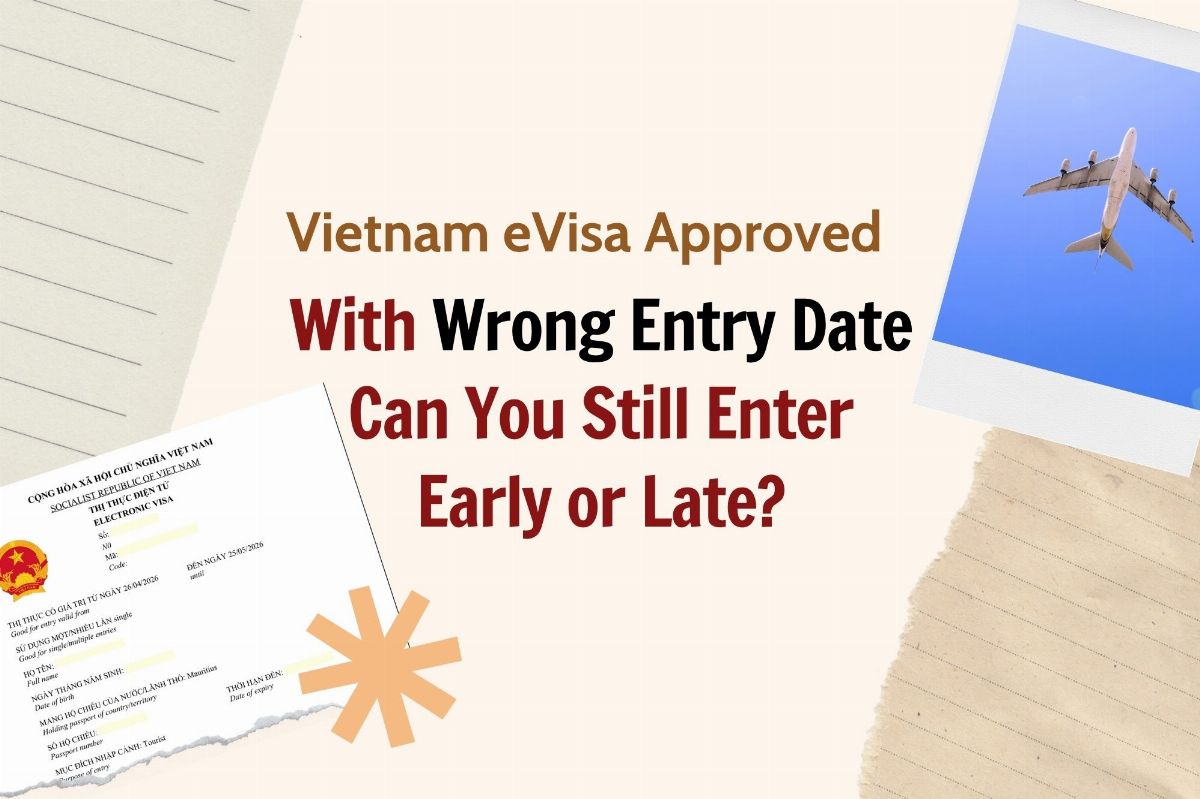
You can enter Vietnam on your eVisa entry date or any day after it, as long as you don't go past your exit date — but entering even one day early is never allowed, with no exceptions. Arriving later than planned does not extend your exit date either. Here's exactly how the calculation works, and the buffer trick experienced travelers use to avoid this problem entirely.
Key takeaways:
-
Arriving late is always permitted — there's no penalty and no cutoff, as long as you're still within the validity window.
-
Arriving early is never permitted, not even by one day, with no exceptions made at the border.
-
Your exit date is fixed to your entry date, not to when you actually arrive — late arrival means fewer days, not extra days.
-
Many experienced travelers deliberately set their entry date a few days before their actual planned arrival as a safety buffer.
-
This is different from having typed the wrong date by mistake — if that's your situation, see the correction guide linked below instead.
The Core Rule: How Entry Date and Exit Date Actually Work
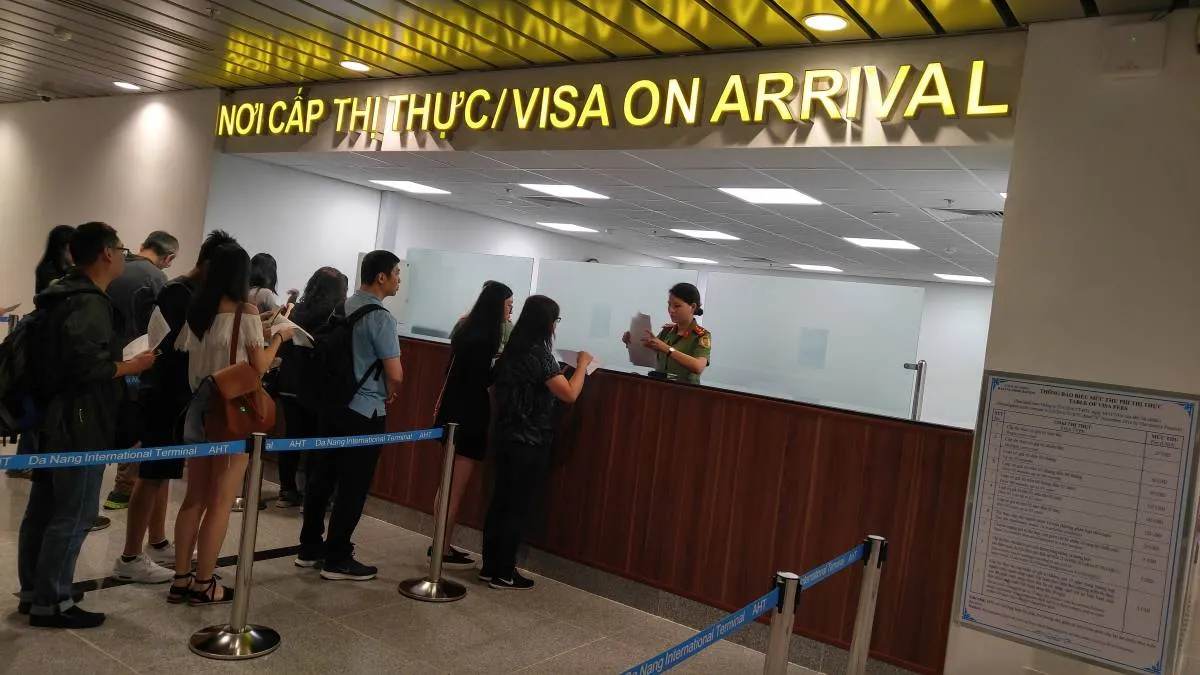
Photo: Collected
Your Vietnam eVisa validity date has two parts, and almost every question about early or late arrival comes down to understanding how they relate:
-
Entry date — the earliest day you're permitted to enter Vietnam.
-
Exit date — the last day you're permitted to still be in the country, calculated directly from your entry date.
The formula is straightforward: for a 30-day eVisa, the exit date falls 29 calendar days after the entry date, because both the first and last day are counted as full days. For a 90-day eVisa, the exit date falls 89 calendar days after the entry date. This exit date is fixed the moment your eVisa is approved — it does not shift based on when you actually show up.
Arriving Later Than Your Entry Date — Allowed, But It Costs You Days
This is the more common situation, and the answer is simple: yes, you're allowed to arrive later than your entry date. There's no penalty, no extra paperwork, and no issue at immigration for arriving late.
The part travelers often miss: your exit date does not move with you. Arriving late doesn't give you extra days at the end — it only shortens how much of your validity window is left.
Here's a concrete example. Say your 30-day eVisa runs from 1 November to 30 November. If you actually land on 6 November instead, you still must leave on or before 30 November — not 30 days from when you landed. In practice, you now have 25 days in the country, not 30, even though your eVisa was correctly approved for a full month.
This matters most for anyone calculating a tight itinerary around a fixed number of travel days. Always count your remaining stay from your actual arrival date to the printed exit date, not from the total validity period you originally applied for.
Arriving Earlier Than Your Entry Date — An Absolute Rule With No Exceptions
This direction is far less forgiving. If your eVisa's entry date is 10 October and you try to arrive on 9 October, you will not be allowed in — not for one day early, not for any reason, and this is not something that can be negotiated at the border.
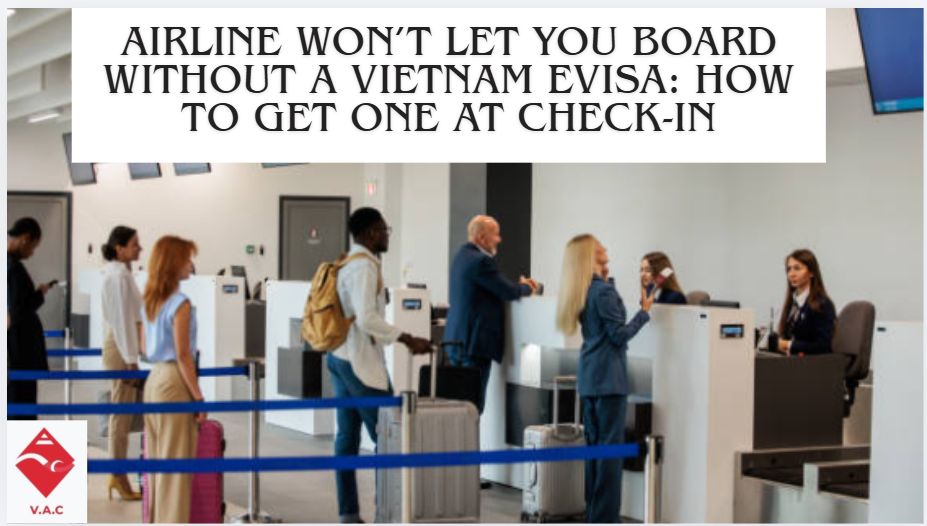
One detail worth understanding clearly: this problem usually surfaces before you even reach Vietnam. Airline staff check your eVisa dates against your flight at check-in, since the airline is responsible for passengers it transports. That means an early arrival typically results in being denied boarding at your departure airport — you lose the flight entirely, not just a day of your trip.
There is no grace period built into this rule anywhere in the system. If your travel plans genuinely shift earlier, the only fix is applying for a new eVisa with a corrected entry date before you fly.
The Buffer Trick Experienced Travelers Use
Because arriving early is unforgiving and arriving late only costs you unused days, there's a simple asymmetry you can use to your advantage: it's far safer to request an entry date slightly before your actual planned arrival than to cut it exactly on the day.
Two practical habits many returning travelers follow:
-
Set your entry date 3–4 days before your real planned arrival. If your flight schedule shifts earlier for any reason, you're already covered. If it doesn't shift, arriving "late" relative to your entry date costs you nothing — you've simply built in flexibility.
-
Request the maximum number of days you're eligible for, even if you don't plan to use all of them. If you qualify for a 90-day Vietnam eVisa, apply for the full 90 rather than a shorter window — unused days at the end have no downside, while running out of validity mid-trip does.
This single habit prevents the vast majority of entry-date problems before they can happen.
Not the Same Thing: A Genuine Typing Mistake
It's worth being precise here, because this page is specifically about a correctly entered entry date that simply doesn't match your actual travel plans — not about having typed the wrong date by accident.
If you meant to enter 10 October but actually typed 1 October on your application, that's a data-entry mistake, not a timing question. A Vietnam eVisa entry date mistake like this needs to be corrected through a new application, since approved eVisas cannot be edited after submission. If you're in this situation — an eVisa approved with the wrong date due to how it was typed, rather than a date that no longer matches your updated travel plans — the right next step is different from everything above.
If Your Flight Schedule Changed After Approval
If your original entry date was correct when you applied, but your flight has since been cancelled, delayed, or rebooked by the airline, the early/late rules above still apply — but there are a few additional scenarios worth knowing, like what happens if your arrival airport also changes. Rather than repeat that ground here, see our full breakdown.
Frequently Asked Questions (FAQ)
Q1: Can I arrive exactly on my exit date?
Yes. The exit date is the last day you're permitted to remain in Vietnam, so arriving or still being in the country on that date is within your valid window — but you cannot depart Vietnam after it.
Q2: If I'm arriving late, do I need to notify anyone in advance?
No. There's no requirement to notify immigration authorities or your visa provider if you're simply arriving later than your stated entry date, as long as it's still before your exit date.
Q3: How many days of buffer should I build into my entry date?
There's no official recommended number, but many experienced travelers use 3–4 days as a practical safety margin against flight changes. Build in more if your travel plans are still uncertain when you apply.
Q4: Does time zone difference affect how entry date is calculated?
This can matter for arrivals very close to midnight. If your arrival timing is this tight relative to your entry date, it's safer to build in an extra day of buffer rather than rely on exact timing.
Q5: Does this rule work differently for single-entry versus multiple-entry eVisas?
The entry and exit date rules themselves work the same way for both types. The difference is that a multiple-entry eVisa lets you exit and re-enter Vietnam as many times as needed within that same validity window, while a single-entry eVisa becomes void the moment you first leave the country.
Q6: What if I'm not sure whether my situation is a timing issue or a data-entry mistake?
Check your approved eVisa PDF against what you intended to submit. If the entry date shown matches what you meant to enter, but your actual travel plans have simply shifted, that's a timing question — this page covers it. If the date shown doesn't match what you meant to type in the first place, that's a correction case instead.
Q7: Can I still use my eVisa if I arrive several months late, close to my exit date?
Yes, as long as you arrive on or before the exit date, the eVisa remains valid — you'll simply have very few days of stay remaining, since the exit date doesn't move.
Conclusion
The entry and exit dates on your Vietnam eVisa follow one simple, memorable rule: late is allowed but costs you days, early is never allowed under any circumstance. If your travel plans are even slightly uncertain when you apply, building in a few days of buffer on your entry date — and requesting your full eligible validity window — removes almost all of the risk described on this page. Check your approved eVisa now against your actual flight dates, and confirm both sides of that window before you travel.
Whether you need a fast visa, airport fast track, private car, or eSIM, Vietnam-Immi.org is here 24/7 to support your trip.
-
WhatsApp: +84379522522
-
Hotline: +84.379.522.522
-
Email: sales@vietnam-immi.org