English
 简体中文
 VIETNAM-IMMI.ORG


Last Updated: Sunday, August 16, 2026
Asia is home to some of the world's most magnificent spiritual landmarks—from the serene wooden pagodas of Hanoi and ancient imperial shrines in Hue to the breathtaking temple complexes across Southeast Asia. Exploring these sacred spaces offers deep insight into local traditions, architecture, and spiritual life.
However, unlike standard tourist attractions or beach resorts, temples and pagodas are active places of worship deeply revered by local communities. Failing to observe sacred site rules can lead to awkward encounters or, worse, being turned away at the entrance. Here is your essential Vietnam temple etiquette guide on what to wear to temples in Asia and how to avoid costly clothing blunders.
The Core Rules: What to Wear to Buddhist Temples
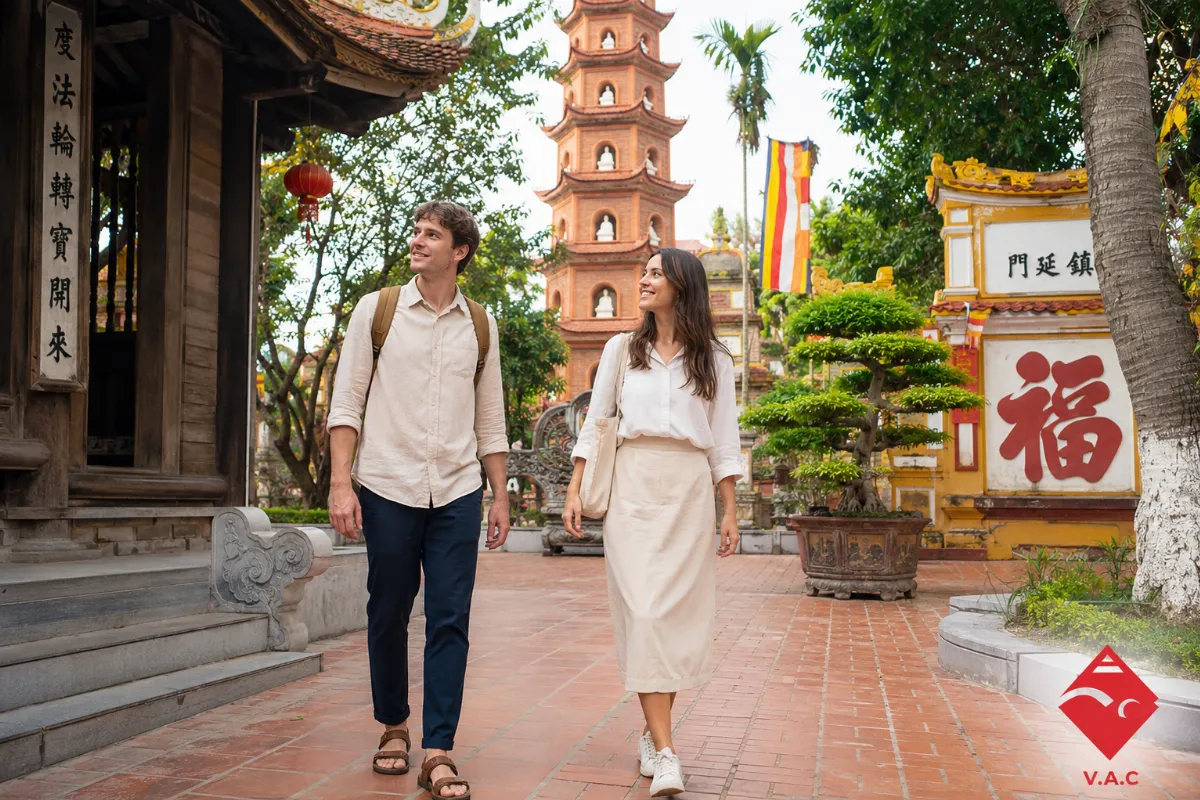
While dress codes can vary slightly between countries and specific sites, fundamental modesty guidelines remain remarkably consistent across the continent.
The Gold Standard: Cover Shoulders and Knees
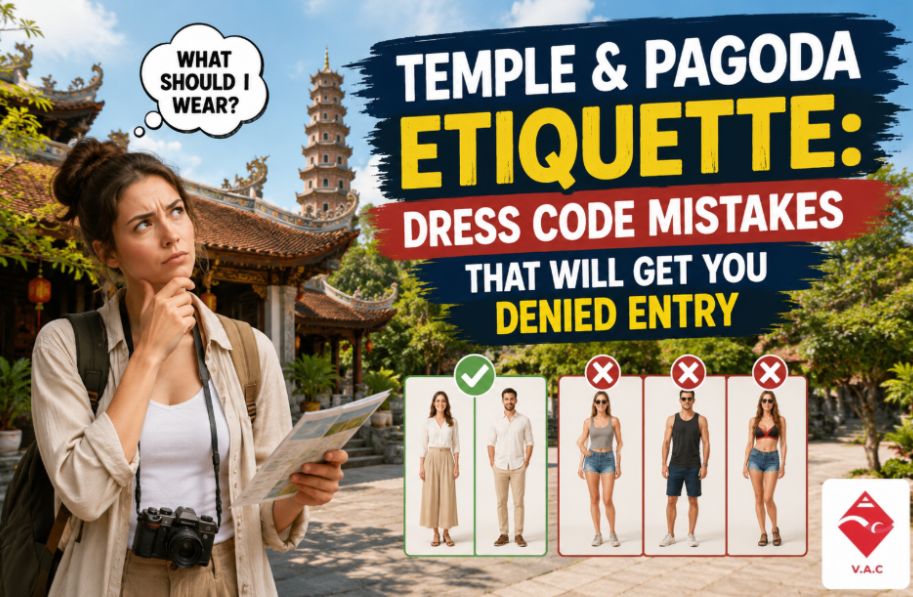
Understanding what to wear to Buddhist temples comes down to one golden rule: keep your shoulders, chest, and knees completely covered. Both men and women should wear shirts or tops with sleeves (short sleeves or long sleeves) and full-length trousers, long jeans, or skirts that fall well below the knees. Wearing crop tops, tank tops, spaghetti straps, or low-cut necklines violates basic sacred space etiquette.
Footwear Etiquette: Shoes and Socks
Before stepping onto the raised wooden platforms of a main temple hall or shrine interior, removing your shoes is mandatory. Look for shoe racks or designated drop-off areas outside the entrance. While walking barefoot is common, wearing clean socks is perfectly acceptable and often recommended for comfort on stone tiles.
Crucial Temple Dress Code Mistakes That Get You Denied Entry
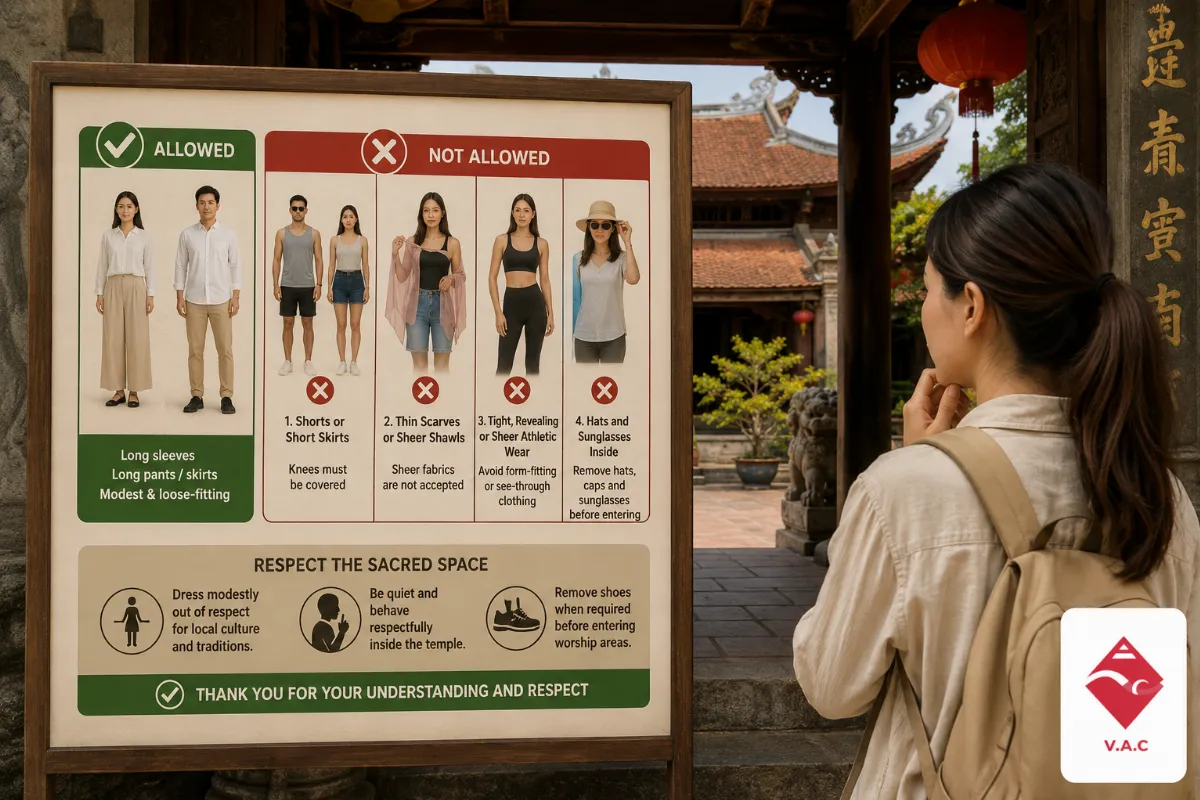
Many well-meaning travelers get turned away at the gate simply because they misunderstand local expectations. Here are the most common mistakes that get you denied entry to temples:
1. Wearing Shorts or Short Skirts
Wearing shorts—even tailored or linen shorts—is one of the most frequent temple dress code mistakes. While high tropical heat makes shorts tempting, security guards at major sites like the Tran Quoc Pagoda in Hanoi or the Grand Palace in Bangkok will deny entry immediately if your knees are exposed.
2. Relying Solely on Thin Scarves or Shawls
Many tourists assume that wrapping a light sheer scarf over a sleeveless top or tank top will satisfy gate guards. However, at strict cultural sites, sheer or see-through fabrics are rejected. Security staff require solid, non-transparent clothing that fully covers shoulders and upper arms.
3. Tight, Revealing, or Sheer Athletic Wear
Form-fitting gym wear, leggings, yoga pants, or cycling shorts are inappropriate for temple grounds. Even if they cover your legs completely, form-fitting attire is considered immodest in sacred contexts. Choose loose-fitting cotton or linen trousers instead.
4. Wearing Hats and Sunglasses Inside Sacred Halls
While sunglasses and wide-brimmed sun hats are practical outdoors, keeping them on inside a temple hall is seen as disrespectful to the monks and deity statues. Always remove hats, caps, and sunglasses before crossing temple doorways.
Navigating Your Cultural Trip: Practical Travel Tips
Respecting local customs begins long before you arrive at the temple gates. Smooth travel logistics ensure you can focus entirely on enjoying your cultural exploration.
Packing Smart for Vietnam Pagoda Dress Code Rules
When planning what to wear to temples in Vietnam, pack lightweight, breathable fabrics like linen or loose cotton. Carrying a light cardigan or a long sarong in your daypack allows you to adapt quickly if you decide to visit a temple spontaneously during your sightseeing tours.
Streamlining Your Arrival with VIP Airport Services
After a long intercontinental flight, the last thing you want is standing in crowded airport immigration queues. Securing a Vietnam e-Visa for cultural travel online ensures your travel paperwork is sorted well before taking off. To make your arrival even smoother, booking a Fast track Vietnam airport service pairs you with a personal escort right at the gate. Your assistant guides you through priority immigration counters, ensuring quick airport clearance so you can begin your cultural tour refreshed.
Key Takeaways for Temple Visitors
-
Cover Shoulders & Knees: Wear tops with sleeves and long trousers or skirts below the knee.
-
Avoid Gym Wear & Sheer Wraps: Sheer scarves and tight leggings are often rejected by security guards.
-
Remove Shoes & Hats: Take off footwear, caps, and sunglasses before entering main prayer halls.
-
Prepare Travel Clearances Early: Obtain your e-Visa online and use airport fast-track services for a seamless trip.
Frequently Asked Questions (FAQ)
Can men wear knee-length shorts to temples in Vietnam?
While some small local pagodas might be lenient, major tourist and spiritual sites (such as the Temple of Literature in Hanoi or Jade Emperor Pagoda in Saigon) strictly require trousers covering the knees for men. Long lightweight pants are always the safest choice.
Are sandals or flip-flops allowed inside temple grounds?
Yes, open-toed shoes, sandals, and slip-ons are allowed on outdoor grounds and are actually very convenient because you must remove your footwear before entering indoor shrine rooms.
Can I rent a sarong or cover-up at the temple entrance?
Some large, high-traffic temples offer sarong rentals or sell modest cover-ups at the entrance gate. However, smaller or less-touristy pagodas do not offer this service, so bringing your own modest clothing is always recommended.
Whether you need a fast visa, airport fast track, private car, or eSIM, Vietnam-Immi.org is here 24/7 to support your trip.
-
Website: https://vietnam-immi.org
-
App IOS Download: https://apps.apple.com/vn/app/vietnam-immi/id6749606825?l=vi
-
App Android: https://play.google.com/store/apps/details?id=com.vac_mobile&pcampaignid=web_share
-
WhatsApp: +84379522522
-
Hotline: +84.379.522.522
-
Email: sales@vietnam-immi.org