English
 简体中文
简体中文 VIETNAM-IMMI.ORG


Last Updated: Friday March 06, 2026
According to the Vietnam Immigration Department, the official entry system now allows travelers to enter and exit Vietnam through 83 designated checkpoints, including 17 airports, 27 land border gates, and 39 seaports. These updates are outlined in Article 2 of Resolution 127/NQ-CP (2023), amended and supplemented by Article 1 of Resolution 389/NQ-CP (12/2025).
This guide explains where travelers can legally enter Vietnam with an e-visa, helping you plan your arrival route with confidence.
Need to Cross the Border Today? New 2026 Entry Points Explained
Vietnam’s 2026 border policy expands the country’s immigration infrastructure while maintaining strict border control procedures. According to the Vietnam Immigration Department, the e-visa system allows travelers to enter through a wide network of smart land crossings, maritime ports, and streamlined air terminals.
Official announcement: The updated list of authorized checkpoints took effect following the amendment issued in December 2025, expanding the total to 83 entry points nationwide.
These include:
-
17 international airports
-
27 land border gates
-
39 seaports
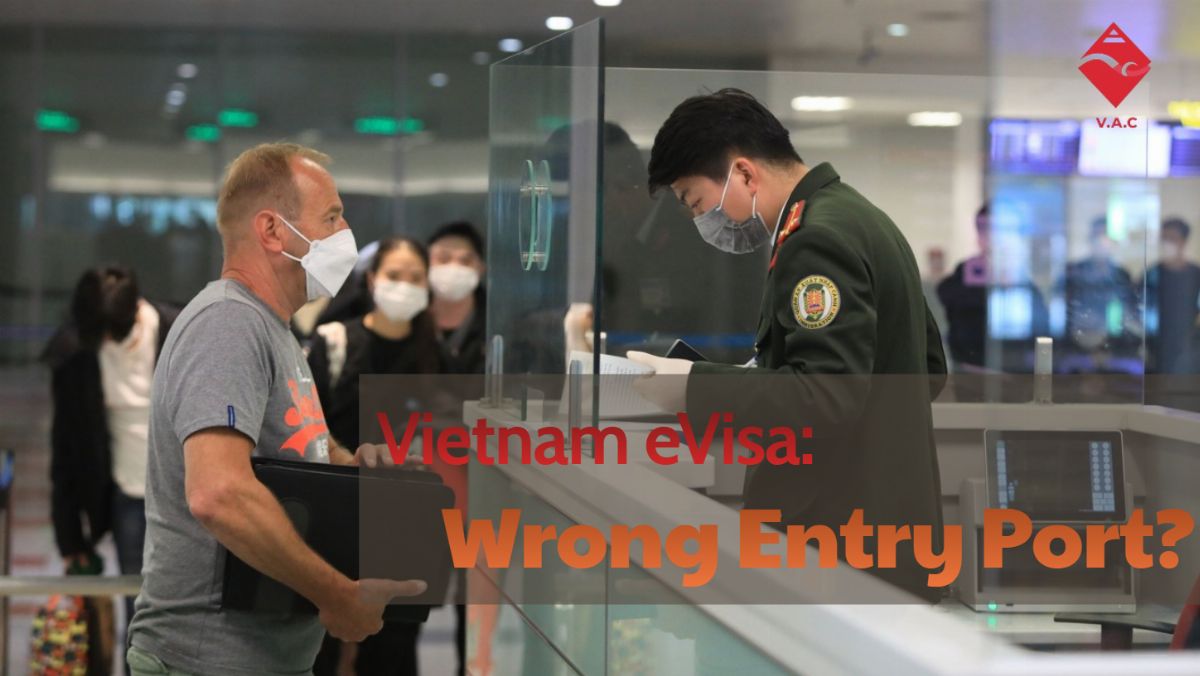
Travelers holding an electronic visa Vietnam approval must ensure they enter through one of these designated checkpoints.
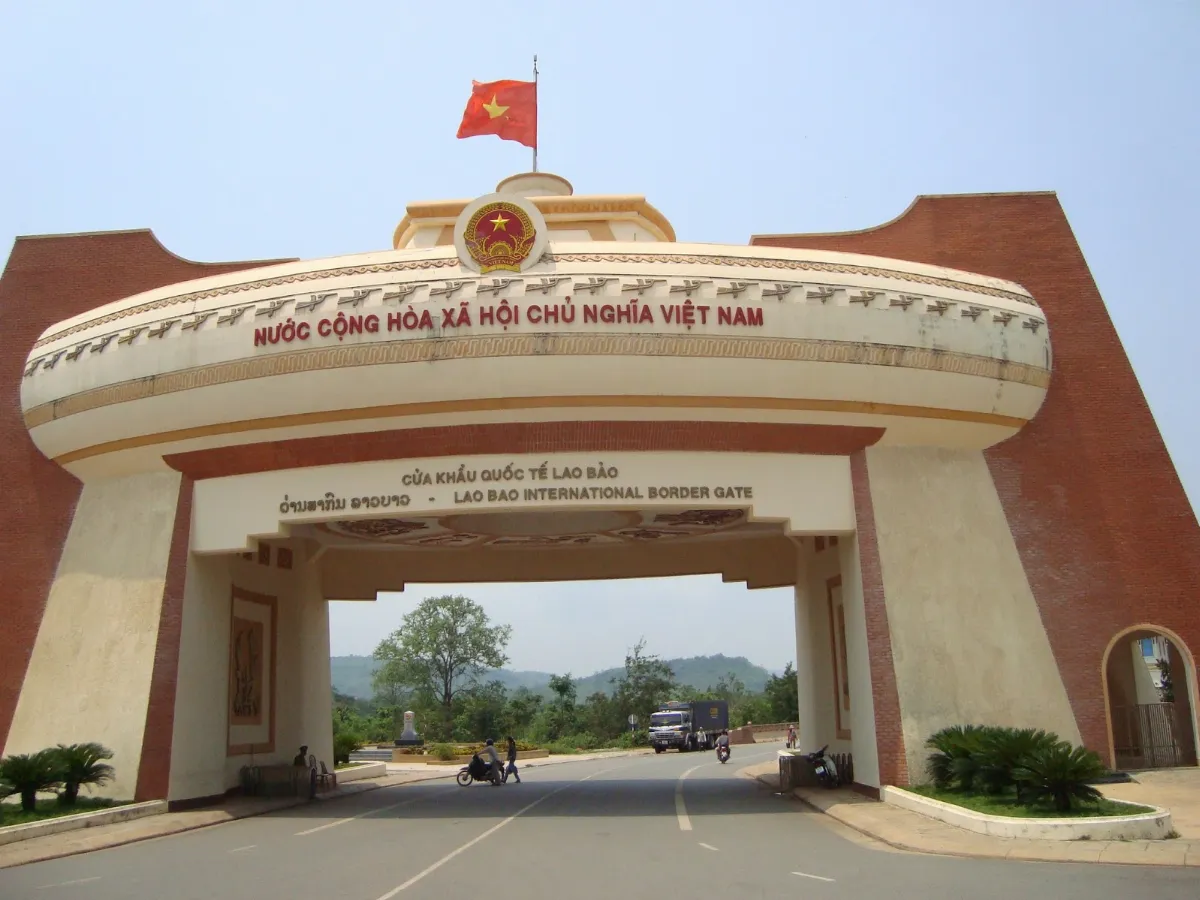
Lao Bao landport (Photo: Collected)
Best Authorized Entry Points for 2026 Travel
Vietnam’s entry system is divided into three categories depending on the method of travel.
17 Airports Allowing E-Visa Entry and Exit
Air travel remains the most popular entry method for international visitors. The following 17 airports support e-visa arrivals and departures.
-
Noi Bai International Airport – Hanoi
-
Tan Son Nhat International Airport – Ho Chi Minh City
-
Cam Ranh International Airport – Nha Trang
-
Da Nang International Airport – Da Nang / Hoi An
-
Cat Bi International Airport – Hai Phong
-
Can Tho International Airport – Can Tho
-
Phu Quoc International Airport – Phu Quoc
-
Phu Bai International Airport – Hue
-
Van Don International Airport – Quang Ninh (Ha Long Bay)
-
Tho Xuan Airport – Thanh Hoa
-
Dong Hoi Airport – Quang Binh
-
Phu Cat Airport – Quy Nhon
-
Lien Khuong Airport – Da Lat
-
Long Thanh International Airport – (effective once operational)
-
Gia Binh International Airport – (effective once operational)
-
Vinh International Airport – Nghe An
-
Chu Lai International Airport – Quang Ngai
These streamlined air terminals are equipped with modern immigration systems to process international travelers using online Vietnam visa applications.
27 Land Border Gates Allowing E-Visa Entry and Exit
Unlike visa-on-arrival, which is limited to air travel, the electronic visa Vietnam also allows entry through land crossings.
Below are the 27 authorized land border gates:
-
Tay Trang – Dien Bien (Laos)
-
Mong Cai – Quang Ninh (China)
-
Huu Nghi – Lang Son (China)
-
Lao Cai – Lao Cai (China)
-
Na Meo – Thanh Hoa (Laos)
-
Nam Can – Nghe An (Laos)
-
Cau Treo – Ha Tinh (Laos)
-
Cha Lo – Quang Binh (Laos)
-
La Lay – Quang Tri (Laos)
-
Lao Bao – Quang Tri (Laos)
-
Bo Y – Kon Tum (Laos)
-
Moc Bai – Tay Ninh (Cambodia)
-
Xa Mat – Tay Ninh (Cambodia)
-
Tinh Bien – An Giang (Cambodia)
-
Vinh Xuong – An Giang (Cambodia)
-
Ha Tien – Kien Giang (Cambodia)
-
Dong Dang Railway Gate – Lang Son (China)
-
Lao Cai Railway Gate – Lao Cai (China)
-
Tra Linh – Cao Bang (China)
-
Long Sap – Son La (Laos)
-
Nam Giang – Quang Nam (Laos)
-
Le Thanh – Gia Lai (Cambodia)
-
Binh Hiep – Tay Ninh (Cambodia)
-
Thuong Phuoc – Dong Thap (Cambodia)
-
Dinh Ba – Dong Thap (Cambodia)
-
Tan Nam – Tay Ninh (Cambodia)
-
Thanh Thuy – Ha Giang (China)
These smart land crossings support travelers entering Vietnam from China, Laos, and Cambodia.
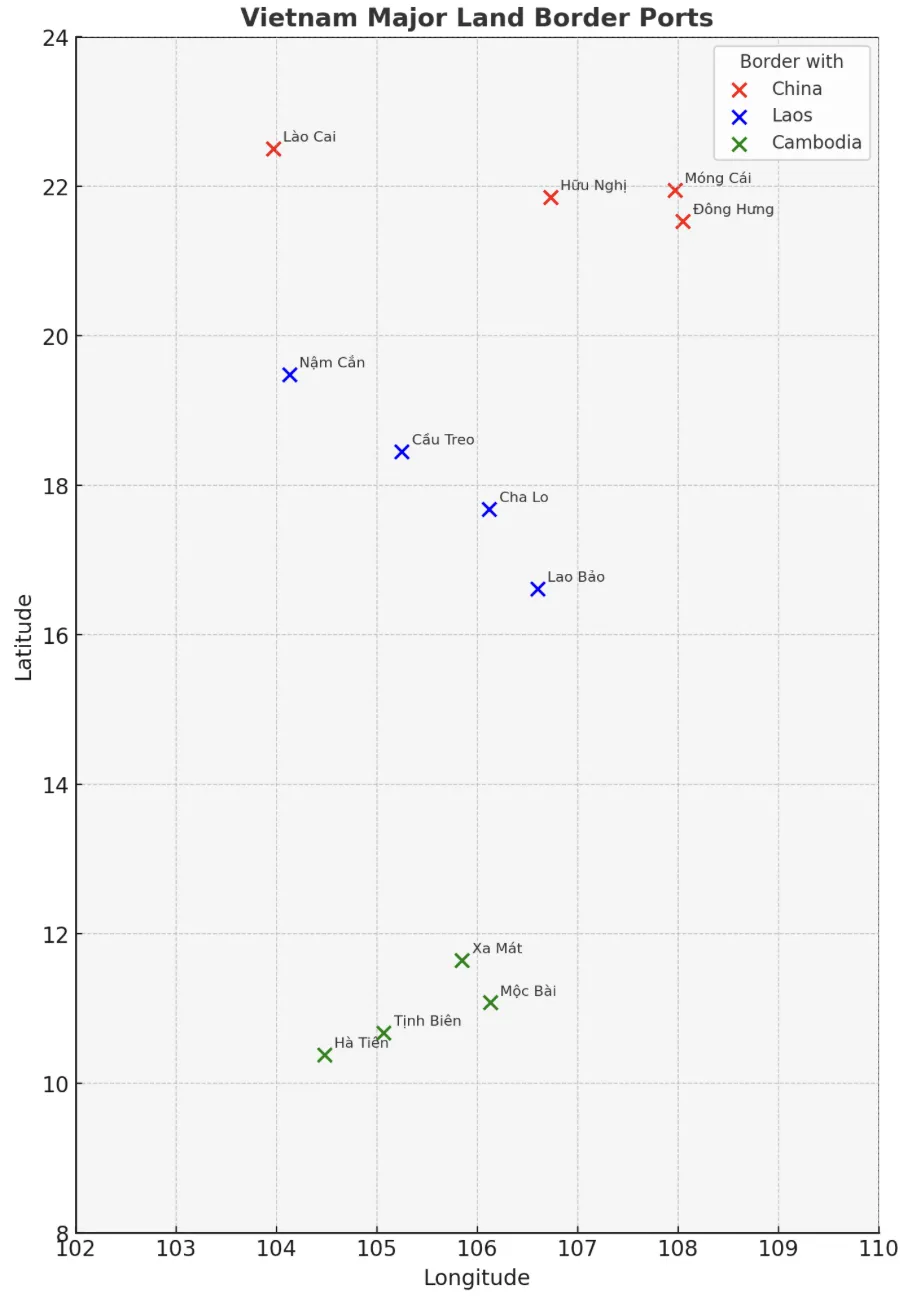
This chart is for demonstration and reference only, generated by AI
39 Seaports Allowing E-Visa Entry and Exit
Vietnam also supports international entry through maritime ports, especially for cruise passengers and regional ferry travel.
Authorized seaports include:
-
Hon Gai Port – Quang Ninh
-
Cam Pha Port – Quang Ninh
-
Hai Phong Port – Hai Phong
-
Nghi Son Port – Thanh Hoa
-
Vung Ang Port – Ha Tinh
-
Chan May Port – Hue
-
Da Nang Port – Da Nang
-
Nha Trang Port – Khanh Hoa
-
Quy Nhon Port – Binh Dinh
-
Dung Quat Port – Quang Ngai
-
Vung Tau Port – Ba Ria–Vung Tau
-
Ho Chi Minh City Port – Ho Chi Minh City
-
Duong Dong Port – Phu Quoc
-
Van Gia Port – Khanh Hoa
-
Diem Dien Port – Thai Binh
-
Hai Thinh Port – Nam Dinh
-
Ninh Binh Port – Ninh Binh
-
Cua Lo – Ben Thuy Port – Nghe An
-
Son Duong Port – Ha Tinh
-
Gianh Port – Quang Binh
-
Hon La Port – Quang Binh
-
Cua Viet Port – Quang Tri
-
Thuan An Port – Hue
-
Ky Ha Port – Quang Nam
-
Sa Ky Port – Quang Ngai
-
Vung Ro Port – Phu Yen
-
Ca Na Port – Ninh Thuan
-
Ninh Chu Port – Ninh Thuan
-
Phu Quy Port – Binh Thuan
-
Lien Huong Port – Binh Thuan
-
Ben Luc Port – Long An
-
Dong Thap Port – Dong Thap
-
Soai Rap – Hiep Phuoc Port – Ho Chi Minh City
-
My Thoi Port – An Giang
-
Hon Chong Port – Kien Giang
-
An Thoi Port – Phu Quoc
-
Truong Long Hoa Port – Tra Vinh
-
Giao Long Port – Ben Tre
-
Nam Can Port – Ca Mau
These maritime ports support both commercial shipping and international cruise tourism.
Frequently Asked Questions (FAQ)
Q1: How many entry points allow Vietnam e-visa in 2026?
According to the Vietnam Immigration Department, travelers can enter through 83 authorized checkpoints, including 17 airports, 27 land borders, and 39 seaports.
Q2: Can I enter Vietnam by land with an e-visa?
Yes. Unlike visa-on-arrival, an electronic visa Vietnam allows entry through designated land border gates.
Q3: Are all airports in Vietnam eligible for e-visa entry?
No. Only the 17 airports officially listed by Vietnam Immigration allow entry and exit using an e-visa.
Q4: Can cruise passengers use e-visa to enter Vietnam?
Yes. Cruise travelers may enter through designated maritime ports listed in the official entry point system.
Q5: When did the 83 entry point policy take effect?
The expanded entry system was updated under Resolution 127/NQ-CP (2023) and amended by Resolution 389/NQ-CP (December 2025), effective 2026.
Whether you need a fast visa, airport fast track, private car, or eSIM, Vietnam-Immi.org is here 24/7 to support your trip.
- Whatsapp: +84379522522
- Hotline: +84.379.522.522
- Email: sales@vietnam-immi.org