English
 简体中文
 VIETNAM-IMMI.ORG


Last Updated: Saturday, September 5, 2026
Vietnam Visa Requirements: Do You Need a Visa?
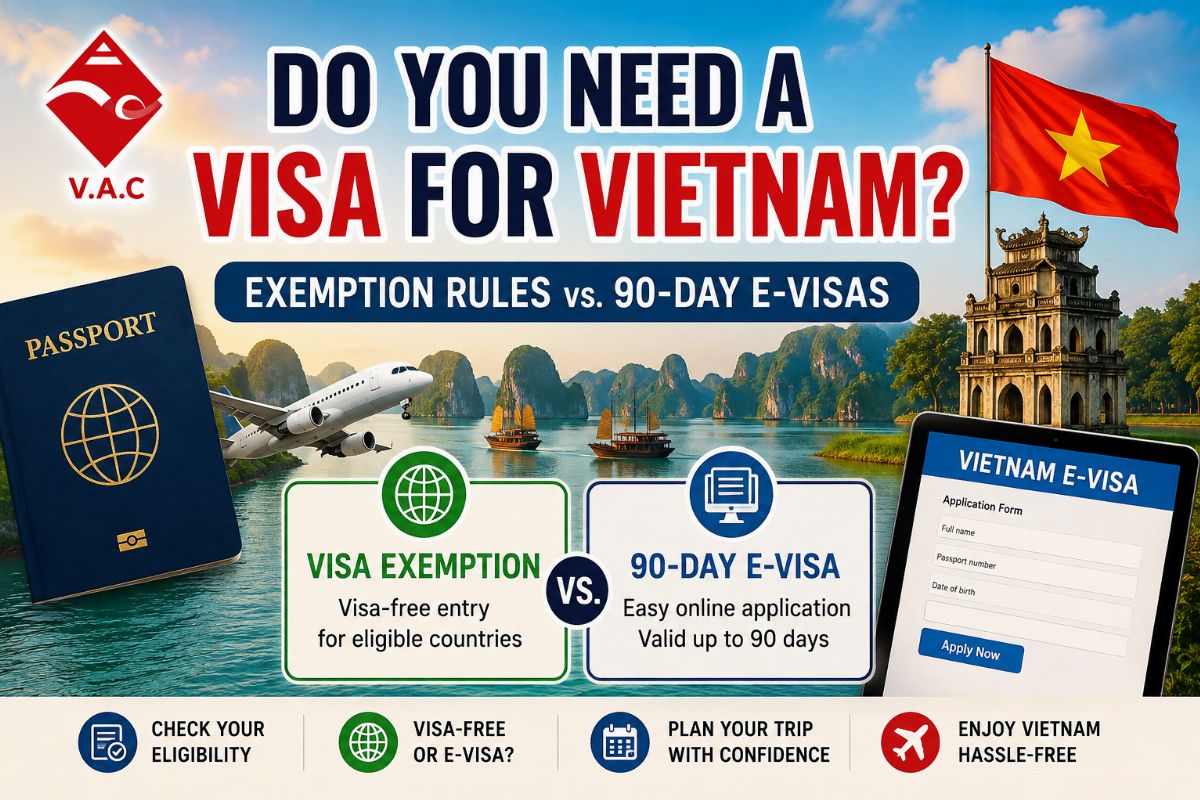
Planning a trip to Vietnam is exciting, but there is one thing you should sort out before booking everything else: Do you need a visa for Vietnam?
The answer depends on your nationality, passport, and how long you plan to stay.
Some travelers can enter Vietnam without a visa under a visa exemption policy, while others need to apply for an eVisa before their trip. Vietnam also offers an eVisa that can be valid for up to 90 days, with either single or multiple entry options.
So, which one is right for you?
The easiest way to decide is to first check whether your nationality is eligible for visa-free entry. If not, or if you are planning a longer or more flexible trip, a Vietnam eVisa may be the more convenient option.
Vietnam Visa Exemption: Who Can Travel Without a Visa?
What Does Vietnam Visa Exemption Mean?
A visa exemption allows eligible travelers to enter Vietnam without applying for a visa before departure.
However, being on a Vietnam visa-free countries list does not automatically mean you can stay for any length of time. The permitted stay depends on the specific visa exemption policy that applies to your nationality and passport.
For example, Vietnam currently allows citizens of 12 countries to stay for up to 45 days without a visa under its unilateral visa exemption policy. These countries include Germany, France, Italy, Spain, the United Kingdom, Russia, Japan, South Korea, Denmark, Sweden, Norway, and Finland.
Other nationalities may benefit from separate bilateral visa exemption agreements, so the permitted stay can be different.
This is why it is always better to check the rules for your own passport rather than simply assuming that you can enter Vietnam visa-free.
Vietnam 90-Day eVisa: A Flexible Option for Travelers
Who Can Apply for a Vietnam eVisa?
One of the biggest advantages of Vietnam's current visa system is that citizens of all countries and territories are eligible to apply for an eVisa.
The Vietnam eVisa can be issued for up to 90 days and may allow either single or multiple entries. This makes it a useful option for travelers who want more flexibility during their trip.
A 90-day eVisa can be particularly helpful if you:
- Are not eligible for visa exemption
- Want to stay in Vietnam for longer than your visa-free period
- Plan to leave Vietnam and return during the same trip
- Are visiting several countries in Southeast Asia
- Prefer to have your visa arranged before boarding your flight
For example, imagine you are spending three weeks in Vietnam, then traveling to Thailand for a few days before returning to Vietnam. A multiple-entry eVisa could make this itinerary much easier to manage.
What Are the Vietnam eVisa Requirements?
When applying, travelers need to provide accurate personal and passport information, including their full name, passport number, date of birth, and intended entry details.
It is important to double-check everything before submitting the application. Even a small mistake in your passport information can potentially cause delays or require corrections.
You should also make sure that your chosen entry checkpoint matches your travel plans. Vietnam eVisas can be used at designated airports, land border gates, and seaports.
Vietnam Visa Exemption vs. 90-Day eVisa: Which Is Better?
It Depends on Your Travel Plans
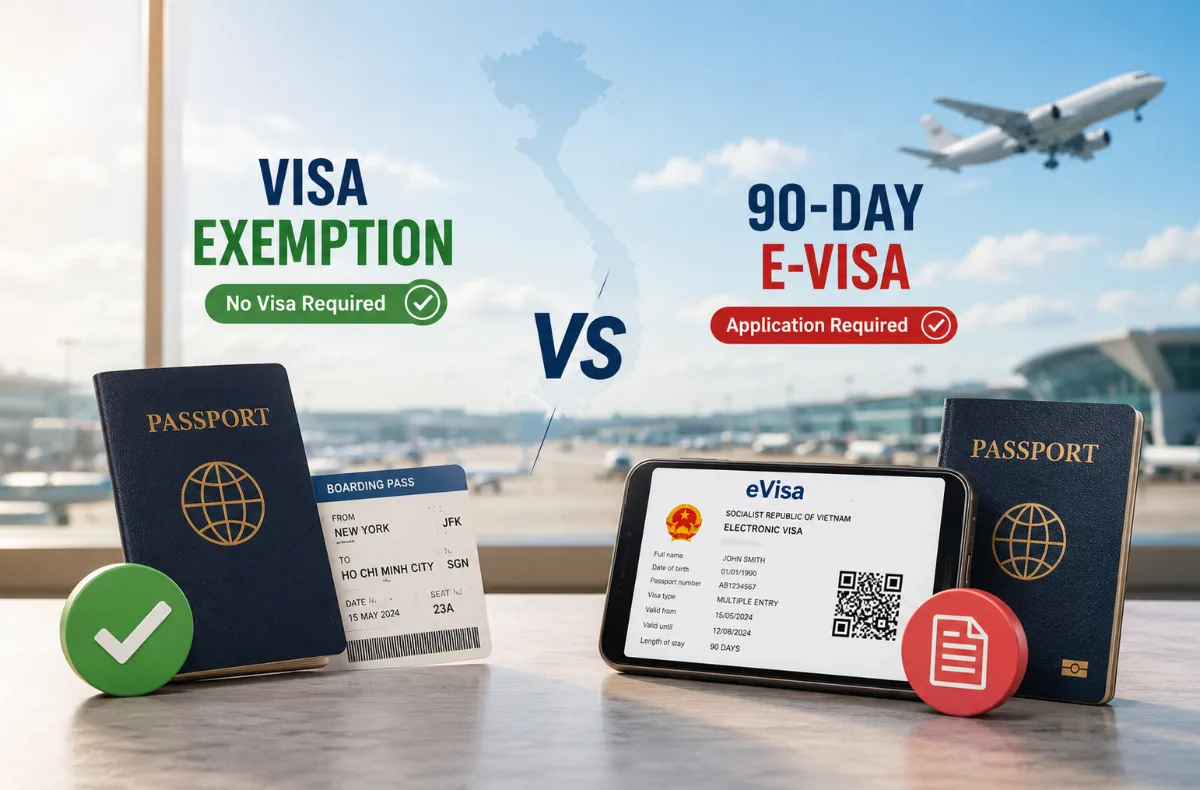
There is no single answer for everyone. If you qualify for visa exemption and your trip fits within the permitted stay, entering without a visa is usually the simplest option.
On the other hand, an eVisa can give you more flexibility, especially if you are planning a longer stay or multiple entries.
| Features | Visa Exemption | 90-Day eVisa |
|---|---|---|
| Visa Application | Not required if eligible | Required |
| Stay Duration | Depends on nationality (up to 45 days for unilateral exemption) | Up to 90 days |
| Entry Options | Depends on exemption policy | Single or multiple entry |
| Eligibility | Specific nationalities | All countries and territories |
| Best For | Short, straightforward trips | Longer or more flexible itineraries |
The key is to look at your Vietnam visa requirements before deciding. A visa-free traveler does not necessarily need to apply for an eVisa, while a traveler who is not eligible for exemption will need an appropriate visa.
What Should You Check Before Traveling to Vietnam?
1. Check Your Nationality
Visa requirements are different from one passport to another. Don't rely only on information from friends or previous trips, as regulations can change.
2. Check How Long You Can Stay
If you qualify for visa exemption, make sure your planned trip does not exceed the permitted period. If you are applying for an eVisa, check the validity dates carefully and make sure they cover your intended stay.
3. Check Your Passport Information
Your name, passport number, date of birth, and other details should match your passport exactly when applying for an eVisa.
4. Check Your Entry Point
If you are traveling by air, confirm the airport listed for your entry. This is especially important if you are arriving through Tan Son Nhat, Noi Bai, Da Nang, Phu Quoc, or another Vietnamese international airport.
5. Prepare for Your Arrival
Having the right visa is important, but it is not the only thing to think about before landing in Vietnam.
International airports can become busy during peak arrival times. If you are traveling with family, have a tight schedule, or simply want a smoother arrival, arranging airport assistance in advance can save time and reduce stress.
Make Your Vietnam Arrival Easier
Once your visa is sorted, you can also arrange other services before your flight:
- Vietnam eVisa: Apply for your Vietnam eVisa in advance and have your travel documents ready before departure.
- Airport Fast Track: Skip long immigration queues with Vietnam Airport Fast Track, available at selected airports.
- Private Airport Car: Need a driver waiting when you land? You can book a private airport transfer and travel directly to your hotel.
- Travel eSIM: Stay connected from the moment you arrive with a Vietnam Travel eSIM.
Key Takeaways
- Visa requirements depend entirely on your nationality and travel plans.
- Citizens of selected countries can enter under the Vietnam visa exemption policy.
- Citizens of all countries and territories can apply for a Vietnam eVisa.
- A Vietnam eVisa can be valid for up to 90 days with single or multiple entry options.
- Always double-check your passport information and entry point before traveling.
Frequently Asked Questions (FAQ)
1. Do I need a visa for Vietnam?
Not necessarily. Some nationalities are eligible for visa-free entry, while others need to obtain a visa before traveling. Your requirements depend on your passport and current immigration rules.
2. How long can I stay in Vietnam without a visa?
It depends on the visa exemption policy that applies to your nationality. Unilateral exemption grants up to 45 days, while bilateral agreements may vary.
3. Can I get a 90-day Vietnam eVisa?
Yes. Vietnam's eVisa is available to citizens of all countries and territories and can be issued for up to 90 days (single or multiple entry).
4. Should I apply for an eVisa if I am visa-exempt?
Not always. If your visa-free period covers your entire trip, you may not need an eVisa. However, an eVisa is useful if you plan to stay longer or need multiple entries.
Ready for Your Vietnam Journey?
Apply for your visa online now with fast turnaround and 24/7 dedicated support.
Apply for Visa Online NowNeed Help With Your Vietnam Trip?
Whether you need a fast visa, airport fast track, private car, or eSIM, Vietnam-Immi.org is available 24/7 to support your trip.
- Website: Vietnam-Immi.org
- iOS App: Download on the App Store
- Android App: Download on Google Play
- WhatsApp: +84 379 522 522
- Hotline: +84 379 522 522
- Email: sales@vietnam-immi.org